How Are Sublimated Patches Made?
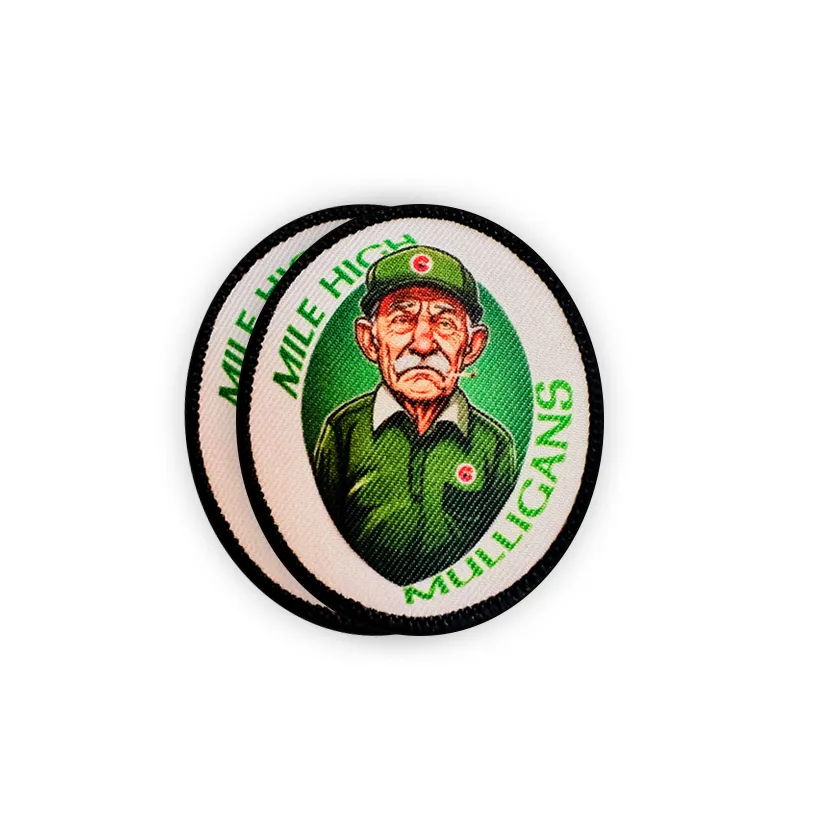
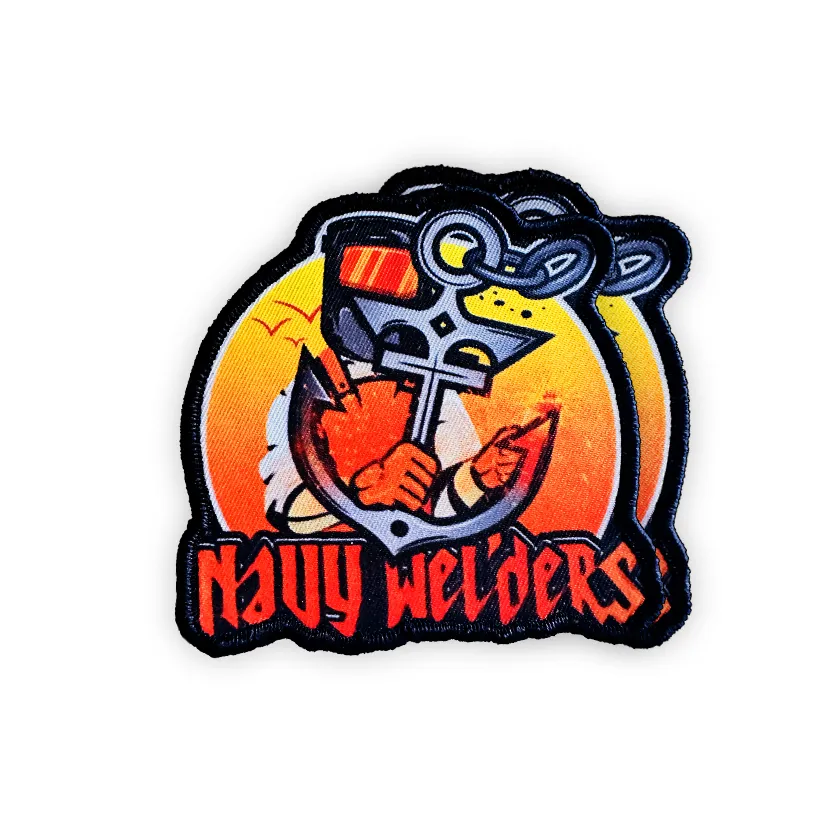
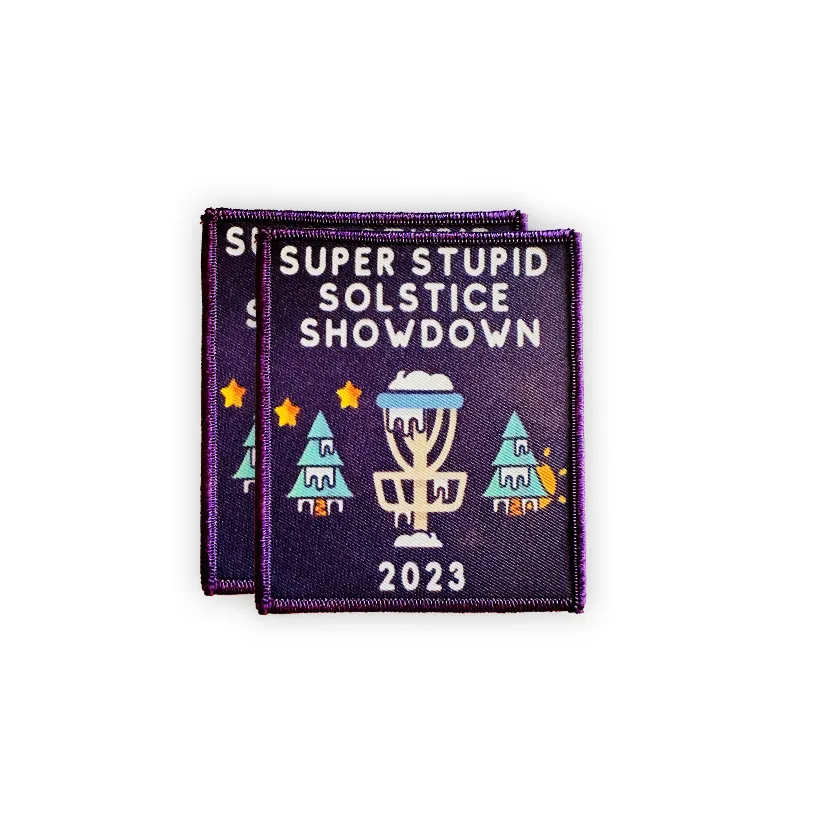
Sublimated patches, also called dye sublimation patches or printed patches, start as a digital image rather than a stitch file. That one difference is why they carry photographs, gradients, and detail no embroidery machine could reproduce.
Here is what happens between your artwork and the finished patch.
- Artwork setup: Your design is color-matched and prepared in CMYK at 300 DPI, the resolution that keeps edges sharp at patch scale.
- Printing: The design is printed in mirror image onto sublimation transfer paper using disperse dye inks. On paper the colors look dull and slightly washed out. That is normal, they have not activated yet.
- Pressing: The printed paper is laid face down on white polyester twill and pressed at roughly 385 to 400 degrees Fahrenheit for 45 to 60 seconds under even pressure.
- The chemistry: At that temperature the dye skips the liquid stage completely and turns straight from solid to gas. The same heat opens the polyester fibers and lets the gas move inside them.
- Cooling and finishing: As the patch cools the fibers close and lock the dye inside the fabric. The patch is then cut to shape, finished with your chosen border, and fitted with the backing you selected.
The result is a patch where the color is part of the fabric rather than a layer sitting on top of it. Nothing can crack or peel away, and the patch keeps the soft, flat feel of plain cloth.
Get a Custom Quote Now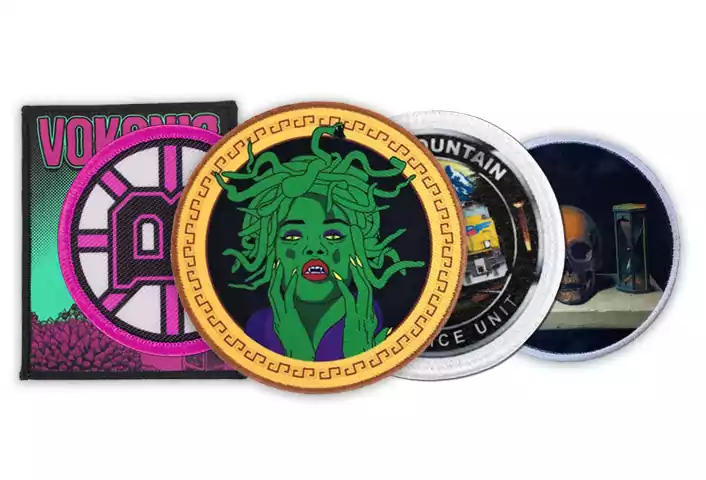
What Sublimated Patches Are Made From
Every sublimated patch we produce starts on white polyester twill. That is chemistry rather than preference. Sublimation dye bonds with polyester polymers and nothing else, which is why the process will not work on cotton, canvas, wool, or any natural fiber. The higher the polyester content, the brighter and stronger the result, so we use 100 percent polyester rather than a blend.
The base fabric is white for a related reason. Sublimation ink is transparent and there is no white ink in the process. Any white area in your design is the base fabric showing through, and every printed color sits over that white base, which is what keeps the colors bright.
Specifications at a glance:- Base fabric: 100 percent polyester twill, white
- Print method: CMYK dye sublimation, unlimited colors
- Finish: flat and smooth, with no raised texture
- Colorfastness: dye sits inside the fiber, so it will not crack, peel, or flake
- Edge finish: merrow, hot cut, laser cut, or embroidered border
- Backing: sew on, iron on, or hook and loop
- Sizes: 2 inches up to 12 inches
Benefits of Sublimated Patches
Sublimation does a few things no other patch method can match.
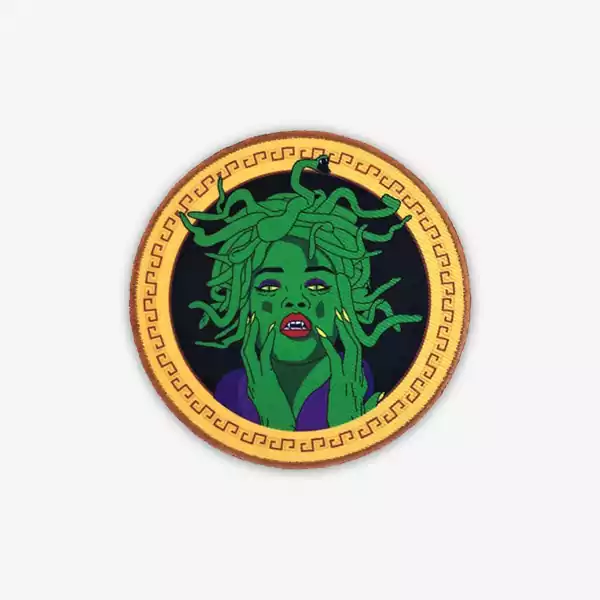
Unlimited colors at one price: Because sublimation is a digital process, a forty color photograph costs exactly the same to print as a two color logo. There are no thread changes and no screens to set up, so color count never affects your quote. This is the main reason designers choose sublimation over embroidery.
Color that cannot crack or peel: The dye sits inside the polyester fiber rather than on the surface. There is no ink layer to flake and no vinyl to lift at the corners after a few washes.
Photographic detail: Gradients, shadows, soft blends, and small text all hold their shape at patch scale. Anything you can supply as a high resolution image can be reproduced.
A flat, lightweight feel: Sublimated patches carry no raised stitching and no added thickness beyond the fabric itself, which makes them comfortable on lightweight garments and easy to layer.
Any shape you want: The patch is cut after printing, so a custom outline costs no more than a circle or a square.
Fast production: There is no digitizing stage and no thread setup, so sublimated patches usually move through production faster than embroidered ones.
Request a QuoteSublimated Patches vs Embroidered Patches
Most people choosing sublimation are also weighing up embroidery. Neither is better across the board, they fail and succeed at different things.
| Details | Sublimated patches | Embroidered patches |
|---|---|---|
| Color range | Unlimited, including gradients and photographs | Limited to thread colors, usually up to around 12 per design |
| Cost of extra colors | None | Each additional thread color can add cost |
| Fine detail | Excellent, holds small text and thin lines | Limited by stitch width, small detail thickens |
| Texture | Flat and smooth | Raised and tactile |
| Weight | Light | Heavier at high stitch counts |
| Best for | Photos, gradients, complex artwork | Logos, bold shapes, traditional look |
| Durability | Color will not crack or peel | Thread can snag or pull under heavy wear |
| Setup | No digitizing needed | Requires digitizing before production |
The short version. If your design has gradients, a photograph, or more colors than thread can comfortably handle, sublimation is built for it. If your design is bold, simple, and you want that raised, traditional patch feel, embroidered patches will serve you better. Send us the artwork either way and we will tell you honestly which one suits it.
What Sublimation Can and Cannot Do
Sublimation is the right choice for most detailed artwork, but it has real limits and it is better to know them before you approve a proof.
What it handles well
- Photographs and portraits
- Gradients, shadows, and soft color blends
- Unlimited colors at no extra cost
- Fine detail and text down to about a quarter inch tall
- Any custom outline you want cut
What it cannot do
- White ink: There is no white in the ink set. White in your design is always the base fabric white, so it cannot be printed over a color.
- Real metallics: Gold and silver can be simulated with gradients, but they will not have actual shine.
- Neon and fluorescent colors: These sit outside the CMYK range, so they print slightly duller than they look on screen.
- Raised texture: Sublimated patches are flat. If you want dimension, embroidered patches or PVC patches are the better route.
If any of these matter to your design, tell us before we produce the proof and we will suggest the closest workable option.
Who Orders Custom Sublimated Patches
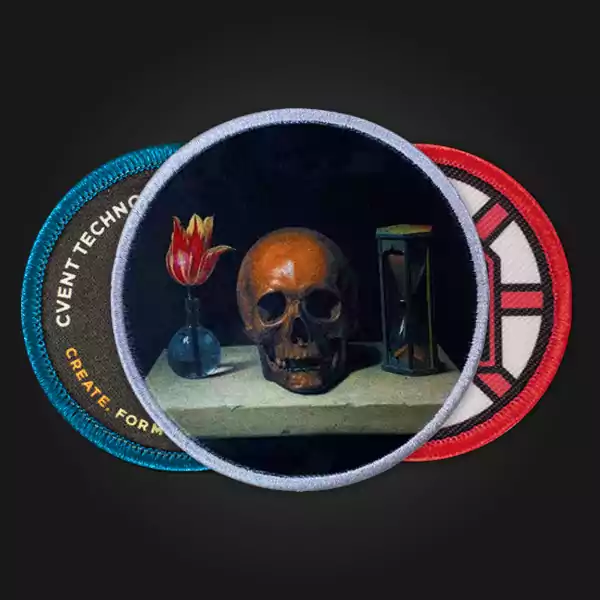
Sublimation suits any design that would lose something in thread. If your logo carries a gradient, your artwork is a photograph, or your design has more colors than an embroidery machine can handle cleanly, this is the process built for it. These are the customers who order it most often.
- Clothing Brands
- Shoes & Bags Producers
- Accessories Brands
- Sports clubs and team patches
- Public services and security uniforms
- Schools and colleges
- Independent artists and Etsy sellers
- Retail outlets ordering vest and jacket patches
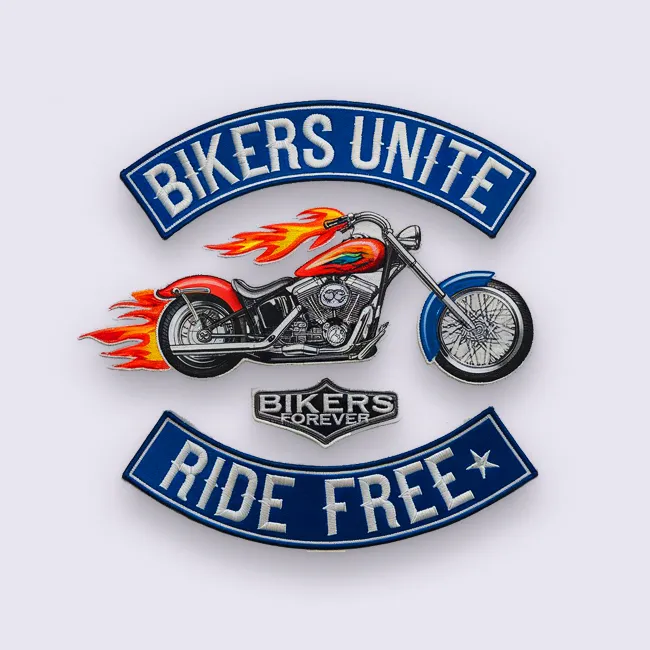
- Motorcycle clubs ordering biker patches
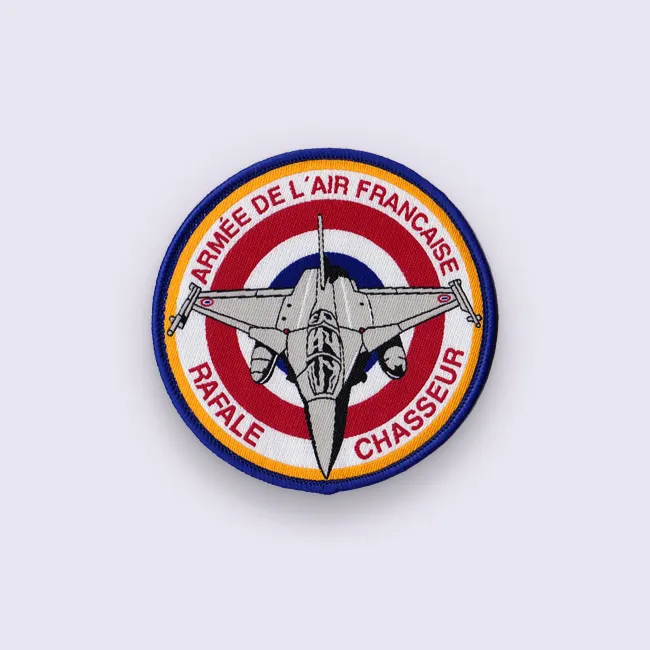
- Military and tactical units ordering morale patches
If your design is simple, bold, and made of solid colors, embroidered patches may serve you better. We will tell you which process fits your artwork when we quote it.
How Long Do Sublimated Patches Last?
A sublimated patch fades on a completely different timeline to a printed or vinyl one, and the reason is where the color sits.
With screen printing, vinyl, or transfer paper, the color forms a layer on the surface of the fabric. Flex that layer through enough wash cycles and it cracks, lifts at the edges, and eventually flakes away. With sublimation the dye is inside the polyester fiber. There is no layer to crack because there is no layer at all.
In practice that means a sublimated patch holds its color through repeated machine washing, shrugs off abrasion from bag straps and jacket cuffs, and keeps its detail long after a printed patch would have gone patchy. Years of constant direct sunlight will eventually soften any dye, which is true of every fabric you own, but under normal wear a sublimated patch outlasts the garment it is attached to.
Sublimated Patch Size Guide
Patch size is measured as the average of the width and the height, so a patch 3 inches wide and 5 inches tall is quoted as a 4 inch patch. These are the sizes we produce most often.
| Size | Common uses |
|---|---|
| 2 to 2.5 inches | Caps, sleeves, chest logos, small name patches |
| 3 to 3.5 inches | The most ordered range. Left chest logos, bags, uniform patches |
| 4 to 5 inches | Jacket fronts, backpack panels, club and team patches |
| 6 to 8 inches | Vest panels, large chest pieces, detailed artwork |
| 10 to 12 inches | Full back patches, banners, display pieces |
Two inches is our practical minimum for sublimation. Below that, fine detail and small lettering start to lose definition once the patch is cut and stitched down. Twelve inches is the largest we produce as a single piece. If your design needs size more than detail, a larger patch usually costs less than people expect, since price is driven mostly by area and quantity. Our guide to standard patch sizes covers how to pick a size for a specific garment.
How Much Do Custom Sublimated Patches Cost?
Sublimated patches are quoted per patch, and the price falls as quantity rises. Four things move the number.
- Quantity. The biggest factor by far. Setup work is the same whether you order ten patches or a thousand, so the more patches share it, the less each one costs.
- Size. Larger patches use more fabric and more press time. Cost rises with area rather than with the longest edge.
- Border and backing. Merrow and embroidered borders add a small amount over a plain hot cut edge. Velcro backing costs slightly more than iron on or sew on.
- Turnaround. Standard production is included in your quote. Rush orders carry a premium because they move ahead of the queue.
What does not affect the price: the number of colors in your design, whether the artwork is a photograph or a flat logo, and whether the shape is a circle or a complex custom outline. All three are free on sublimated patches.
Artwork, digital proofs, and revisions are free on every order, and there are no setup fees at any quantity.
Backings For Sublimated Patches
Here are the backings you can choose for sublimation patches.
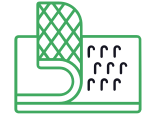
Not sure which to pick? Sew on is the most secure and the right choice for uniforms, workwear, and anything washed frequently at high temperature. Iron on suits jackets, caps, and bags and applies in under a minute, though it needs a fabric that tolerates heat, so skip it on nylon and waterproof shells. Velcro suits anything you need to swap out, which is why morale patches, tactical gear, and unit identifiers almost always use it.
You can also combine them. Plenty of customers order iron on backing and still stitch around the edge afterwards, which gives the fastest application and the strongest hold.
Get in TouchHow To Order Sublimation Patches from The Patchio
Ordering Our Sublimation Patches is Simple and Hassle-Free!
Submit Your Artwork
Upload your artwork if you have it ready, or collaborate with one of our in-house designers—at no extra cost—to bring your vision to life.
Receive a Digital Mockup
We'll provide a digital mockup of your patch design for your review. You can request as many adjustments as needed until you're 100% happy with the result.
Approve The Sample
Once you've reviewed the sample, give us the green light to move forward. This approval will allow us to proceed with full production.
Receive Your Custom Patches
Your custom patches are on their way! We’ll ship them directly to your doorstep with free tracked shipping for added convenience.
Applying and Caring for Sublimated Patches
- Applying an iron on patch. Set the iron to its cotton setting with steam turned off. Position the patch, lay a thin cotton cloth over it, and press down firmly for 30 to 40 seconds without sliding the iron around. Turn the garment inside out and press the reverse for another 15 seconds, then let it cool completely before touching it. Iron on works on cotton, denim, canvas, and poly cotton blends. Skip it on nylon, waterproof shells, and coated fabrics, which will scorch. Use sew on backing for those.
- Washing. Turn the garment inside out and wash cold or warm on a normal cycle. The dye is inside the fiber, so the print itself is not at risk. Turning the garment inside out simply protects the patch edges and any adhesive from abrasion. Tumble dry on low or hang to dry.
- What to avoid. Bleach and solvent based stain removers attack the polyester itself rather than the print. Very high dryer heat can soften iron on adhesive over time, which is why we suggest stitching the edge of an iron on patch if the garment is washed weekly.
- Ironing over the patch later. You can, but always place a cloth between the iron and the patch. Direct contact with a hot plate can glaze the polyester surface.
Artwork and Design Tips for Sublimated Patches
- Send artwork at 300 DPI or higher, or send a vector file, Low-resolution images pulled from a website will look soft once printed. If all you have is a small or blurry file, our vector conversion service can rebuild it before printing.
- Use as many colors as you like: Color count does not affect the price on sublimated patches, so there is no reason to simplify a design for budget reasons.
- Keep text at least a quarter inch tall: Sublimation holds fine detail well, but very small lettering can lose legibility once the patch is cut and stitched down.
- Remember that white is the fabric, not an ink: Any white area in your design will be the natural white of the polyester base. That looks clean on most designs, but it means white cannot sit on top of a printed color.
- Leave a small margin inside the border: Keep important text and logo elements about an eighth of an inch from the edge so nothing is clipped by the merrow stitch or the cut line.
- Match the border to the shape: Merrow suits circles, squares, ovals, and shields. Hot cut and laser cut suit complex outlines a merrow machine cannot follow.
- Order a few days ahead of your deadline: Production is quick, but building the schedule around a hard date leaves no room for a proof revision.
Popular Uses for Custom Sublimated Patches
Sublimated patches turn up anywhere a design is too detailed for thread. These are the three we produce most.
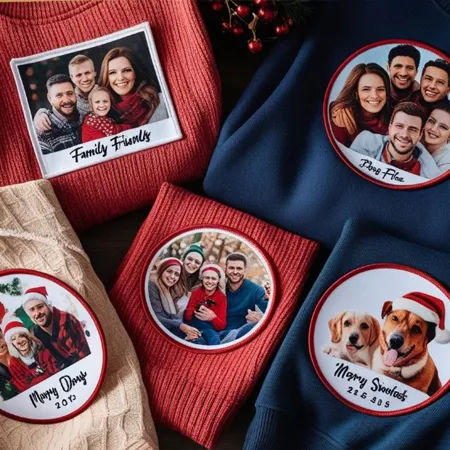
Sweater and apparel patches
Family photographs, group shots, and pet portraits all reproduce cleanly in sublimation, which is why they are a favourite for family sweatshirts and holiday apparel. Every patch in a set can carry a different image at the same price.
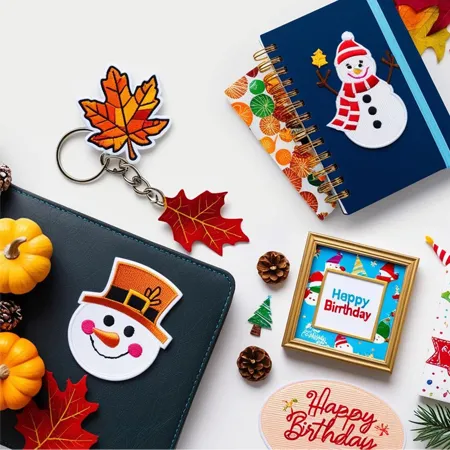
Gift and keepsake patches
Sublimated patches go onto keychains, notebooks, tote bags, and framed keepsakes. Pick the right backing and the same design works across a whole run of personalised gifts.
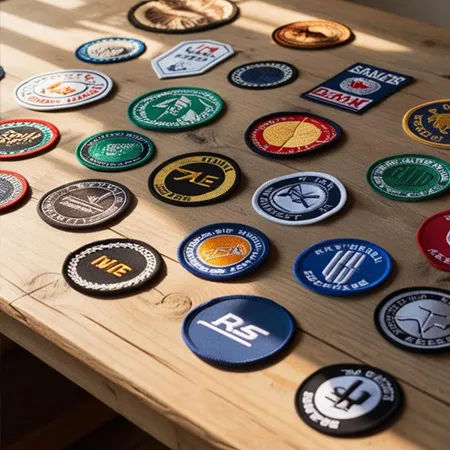
Brand and uniform patches
Company logos with gradients, shadows, or photographic elements reproduce exactly as your brand guidelines specify, with no color substitution and no thread matching. Add them to custom hats, workwear, and jackets.
Border Options: Merrow, Hot Cut, Laser Cut, and Embroidered
Sublimated patches are printed rather than stitched, so the edge finish is a separate choice. Four options, each suited to a different kind of shape.
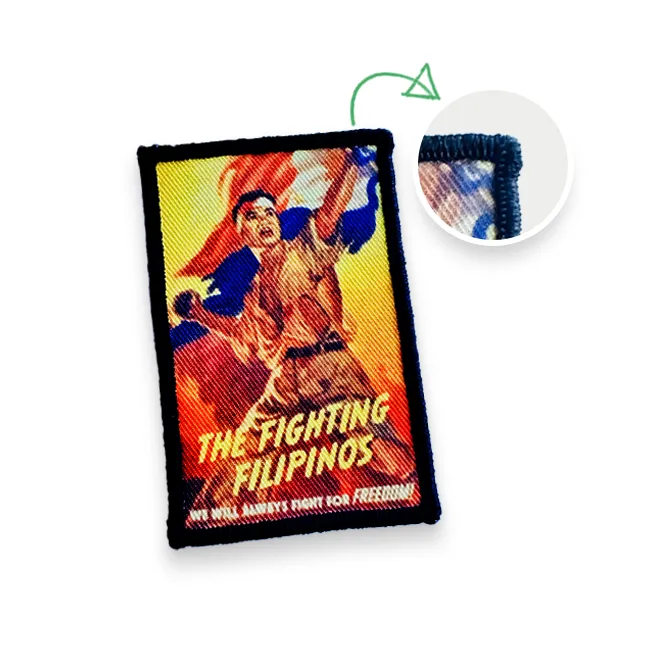
An overlocked thread edge about an eighth of an inch wide, wrapped around the outside of the patch. It gives the classic, slightly raised patch outline and stops the edge fraying. Merrow machines follow curves and straight runs, so this suits circles, ovals, squares, rectangles, and shields. It cannot follow sharp interior angles.
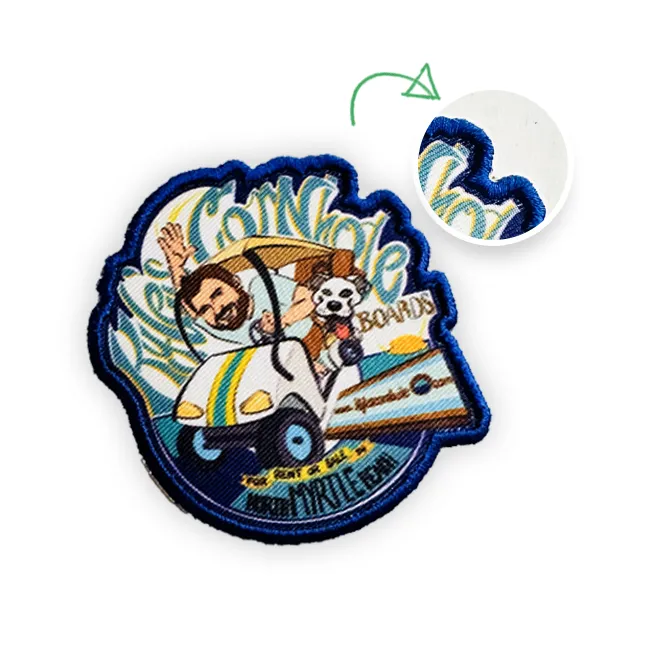
The patch is cut with a heated blade that seals the polyester edge as it cuts, the same principle as a hot knife through rope. There is no stitching, so the edge stays flat and thin. This is the option for complex outlines, script lettering, and any shape a merrow machine cannot trace.
A laser follows your outline with tighter accuracy than a blade and seals the edge as it goes. It gives the cleanest finish on intricate custom shapes and fine internal detail, with no stitched border at all.
A stitched satin edge in a thread color of your choice. It sits flatter than merrow but gives a defined, finished outline, and it works on both regular and irregular shapes.
Our Sublimation Patches Designs
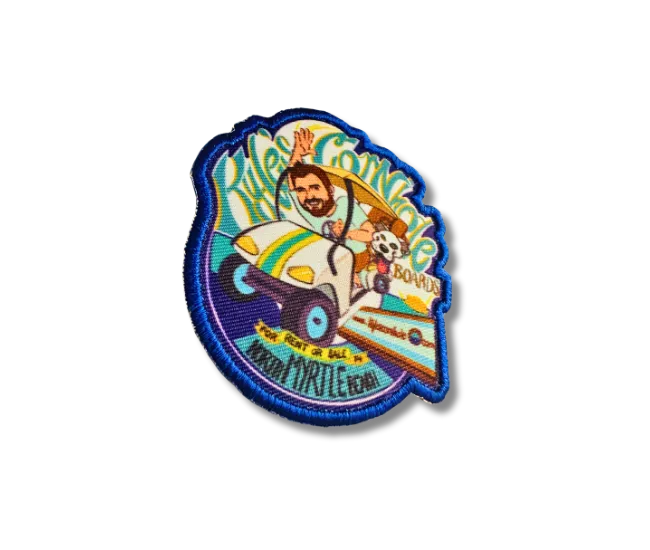
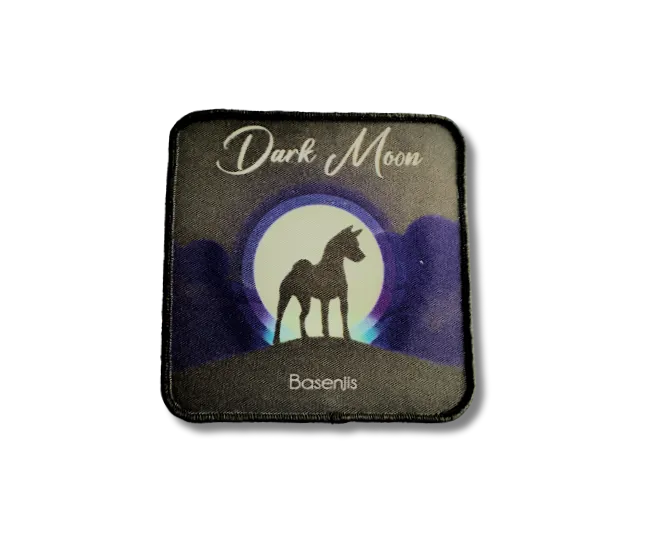
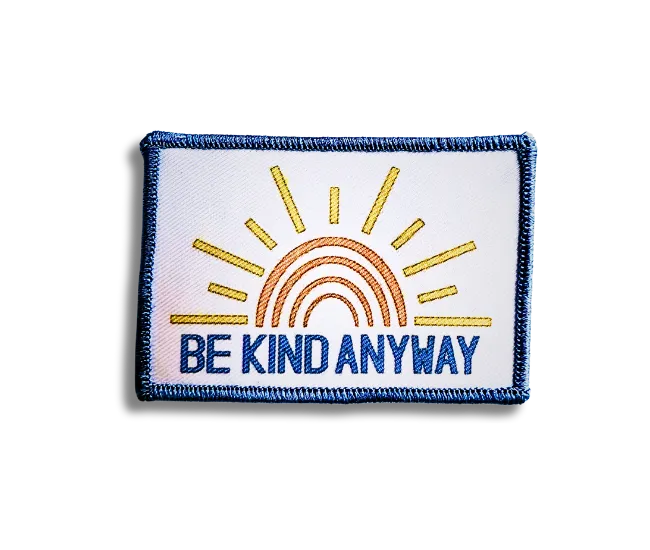
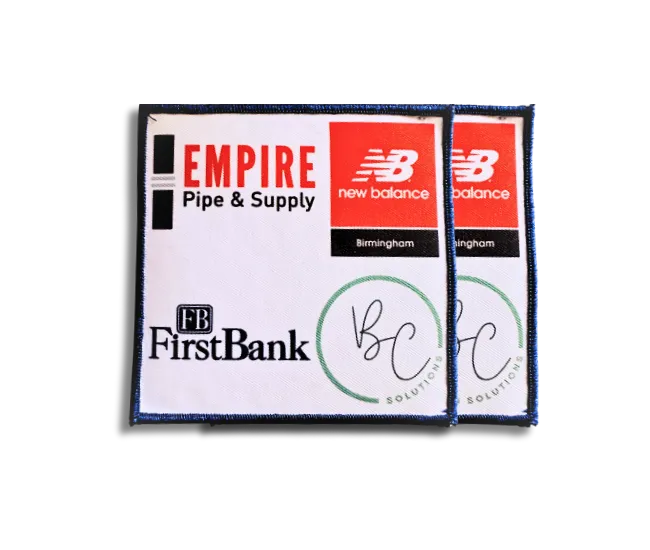
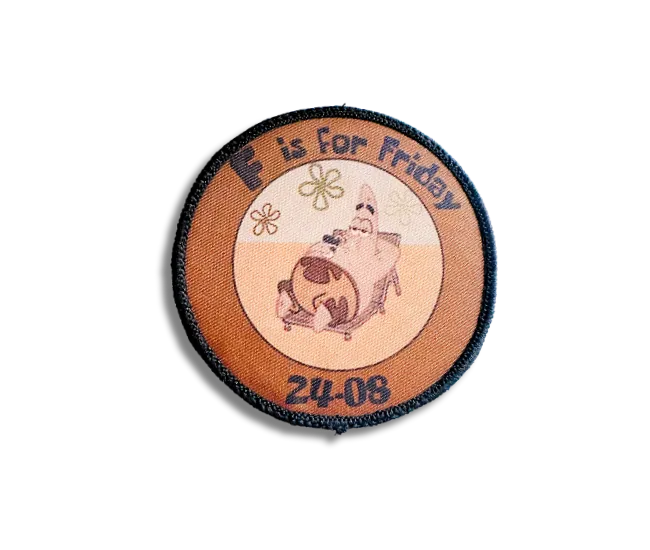
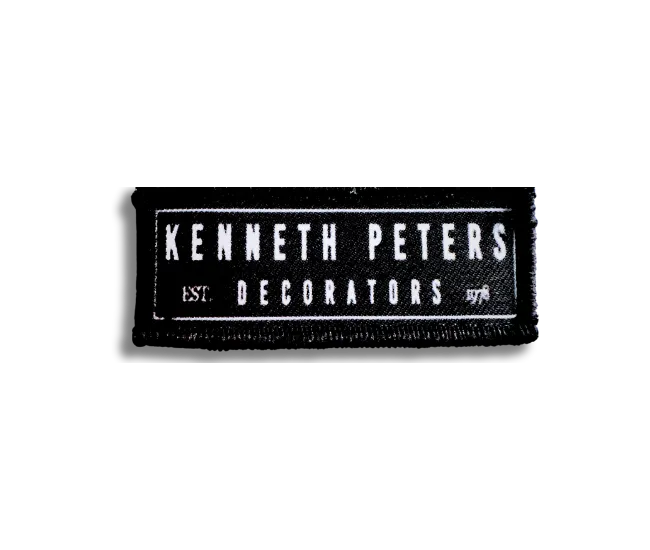
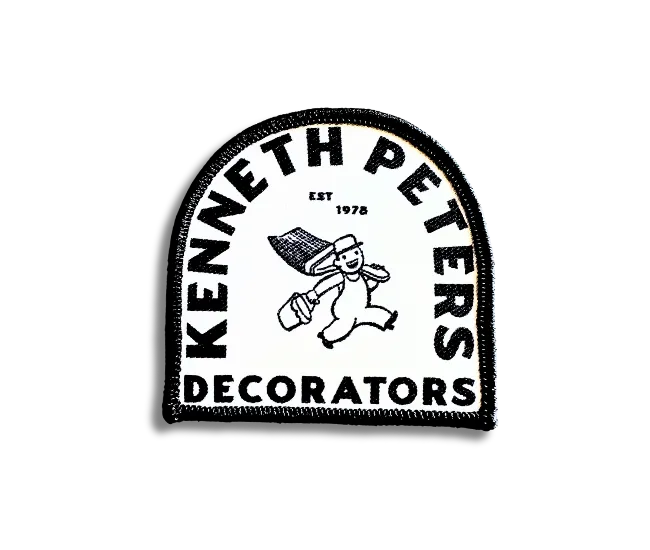
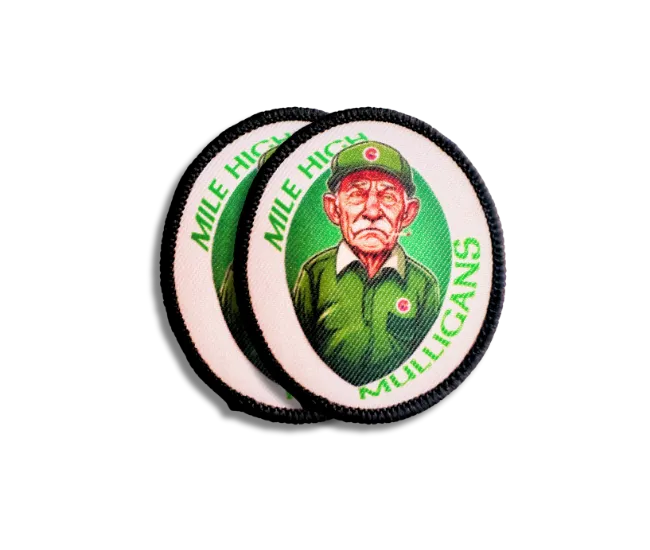
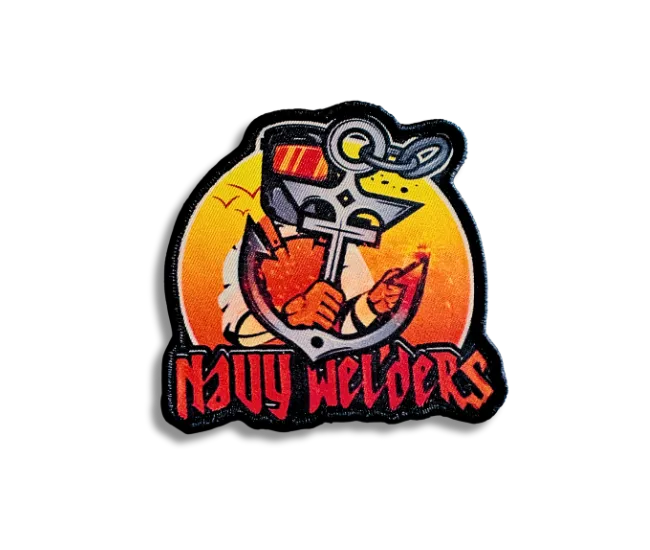
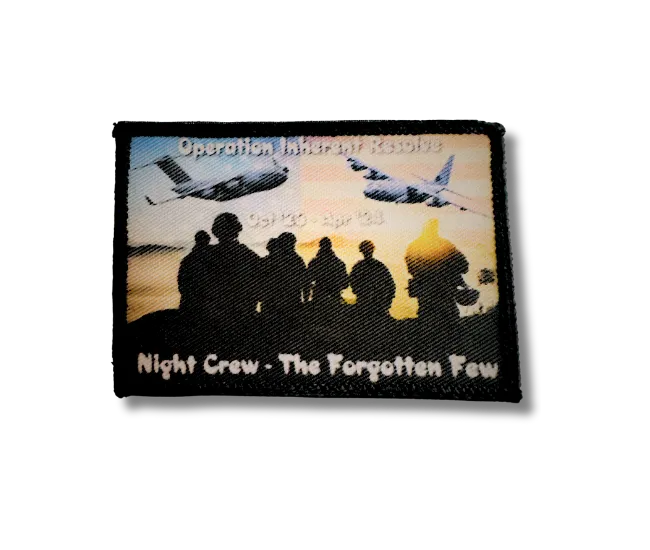
Have a look at our wide range of custom name patch designs:
Sublimation Patches FAQs
Ready to Order Your Custom Sublimated Patches?
Send us your artwork, your size, and roughly how many you need. You will get a free digital proof before anything goes into production, and you can request as many revisions as it takes to get it right. There are no setup fees, no artwork fees, and no minimum order.
If you are not sure sublimation is the right process for your design, send it over anyway. We make embroidered patches, woven patches, PVC patches, and leather patches too, and we will tell you which one your artwork actually suits.
Speak with Our Custom Patch ExpertsDon't Just Take Our Word for It: Check Out Our Reviews!
Excellent

See all reviews here