
The Hells Angels patches remain one of the most powerful and recognizable symbols in motorcycle culture. More than decorative elements on a leather vest, these patches represent earned loyalty, unbreakable brotherhood, strict hierarchy, and a defiant way of life that has captivated riders and outsiders for over seven decades.
For anyone passionate about biking, customizing gear, or exploring outlaw motorcycle club (OMC) history, understanding Hells Angels vest patches provides deep insight into a subculture built on tradition and respect.
In this detailed guide, we'll trace their origins chronologically, break down the symbols and meanings, explain the rules, address the controversies, and answer common questions, all while highlighting how patch-making craftsmanship continues to thrive in the broader biker world.
The Birth of a Legend: Founding and Early Patch Development (1940s–1950s)
The story begins shortly after World War II. On March 17, 1948, in Fontana, California, a group of veterans and riders, many disillusioned by civilian life, merged smaller clubs to form the Hells Angels Motorcycle Club. The name drew inspiration from elite WWII fighter squadrons like the Flying Tigers' "Hell's Angels," as well as the 1930 Howard Hughes film depicting daring pilots. Otto Friedli is often credited as a key founder, though accounts vary, with some pointing to roots in the Pissed Off Bastards of Bloomington.
Early members wore simple insignia inspired by military patches, reflecting their service backgrounds. By the early 1950s, the club standardized its look. Frank Sadilek, president of the San Francisco charter (founded around 1954–1955), is credited with designing the original "Death Head", a winged skull that captured rebellion and unity. This smaller version appeared on jackets in red on white.
The San Francisco charter used a compact logo initially, but change came in 1957 when Ralph "Sonny" Barger founded the Oakland charter. Barger, a pivotal figure, pushed for unification. Legend has it that after his bike broke down in Southern California, a member named Vic Bettencourt helped him, sparking ideas for a consistent emblem. By 1959, the Oakland group introduced the larger "Barger Larger" Death Head, a bolder, more imposing winged skull that became the universal standard.
Throughout the 1950s, charters spread across California (Sacramento in 1956–1957, others in Gardena and Pomona by the late '50s). The first international charter opened in Auckland, New Zealand, in 1961, marking the start of global growth.
Solidifying the Icon: Incorporation, Trademarks, and the Three-Piece Standard (1960s)
The 1960s brought fame and structure. The club gained visibility through counterculture ties in San Francisco's Haight-Ashbury, associating with figures like Hunter S. Thompson (who wrote Hell's Angels) and bands like the Grateful Dead. In 1966, the Hells Angels Motorcycle Corporation formed, trademarking the name, Death Head, and related designs to safeguard their identity.
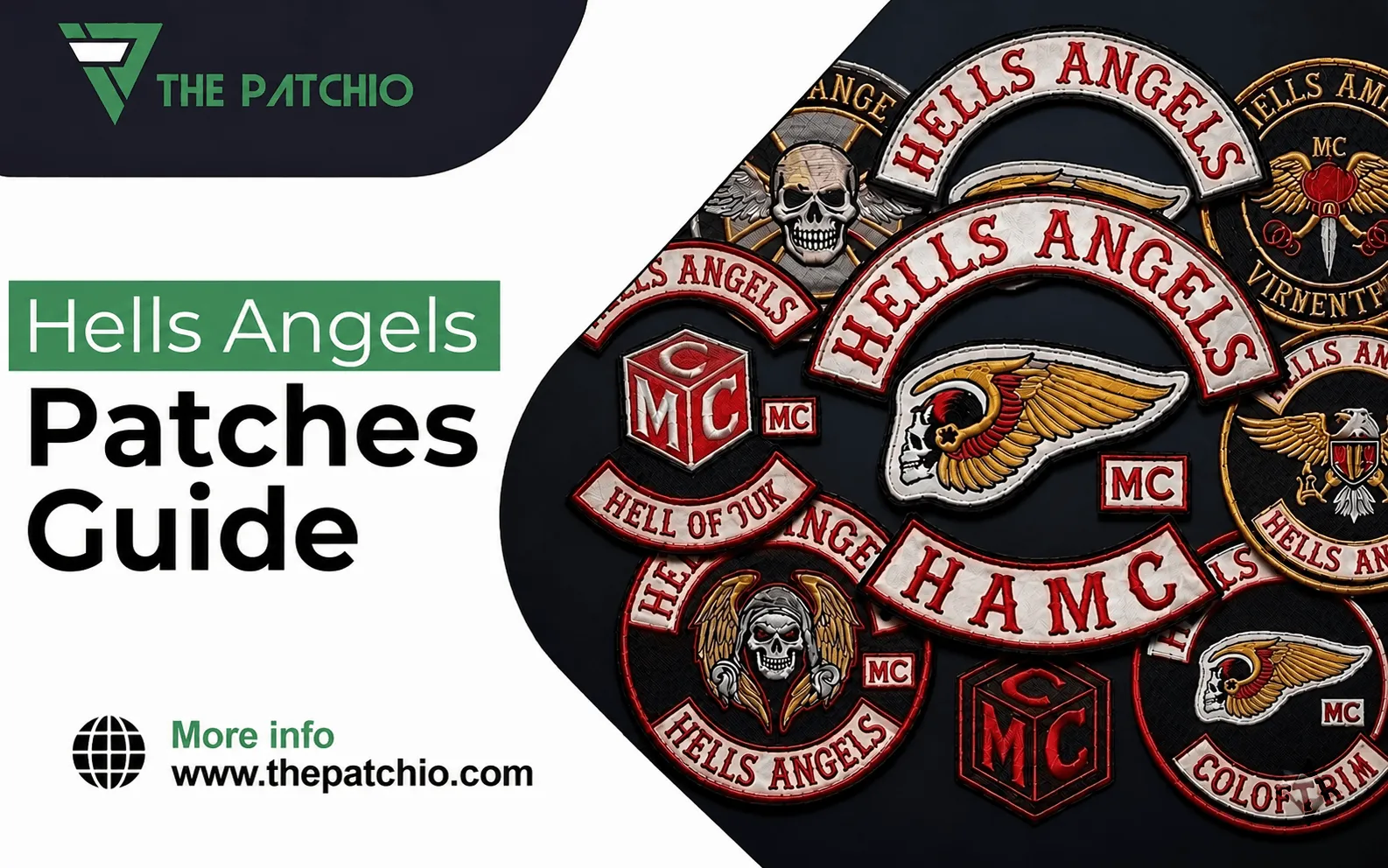
This era locked in the classic three-piece patch (often called a "three-piece" or "full set") worn on the back of a "cut" (leather or denim vest):
- Top rocker: "Hells Angels" in red letters on white.
- Center patch: The iconic Death Head skull with wings, symbolizing defiance, loyalty, and the club's enduring spirit.
- Bottom rocker: The chapter's territory or location, asserting a claim over an area.
An additional "MC" (Motorcycle Club) patch often completes the set. This configuration distinguishes full members and has remained largely unchanged.
The diamond-shaped 1% patch also emerged around this time. It stems from an alleged 1947 American Motorcyclist Association statement after the Hollister riot, claiming 99% of motorcyclists were law-abiding, and 1% were outlaws. Clubs like the Hells Angels embraced the label proudly, wearing the red-on-white "1%" to signal their outlaw ethos.
Earning the Right: Membership Process and Patch Hierarchy
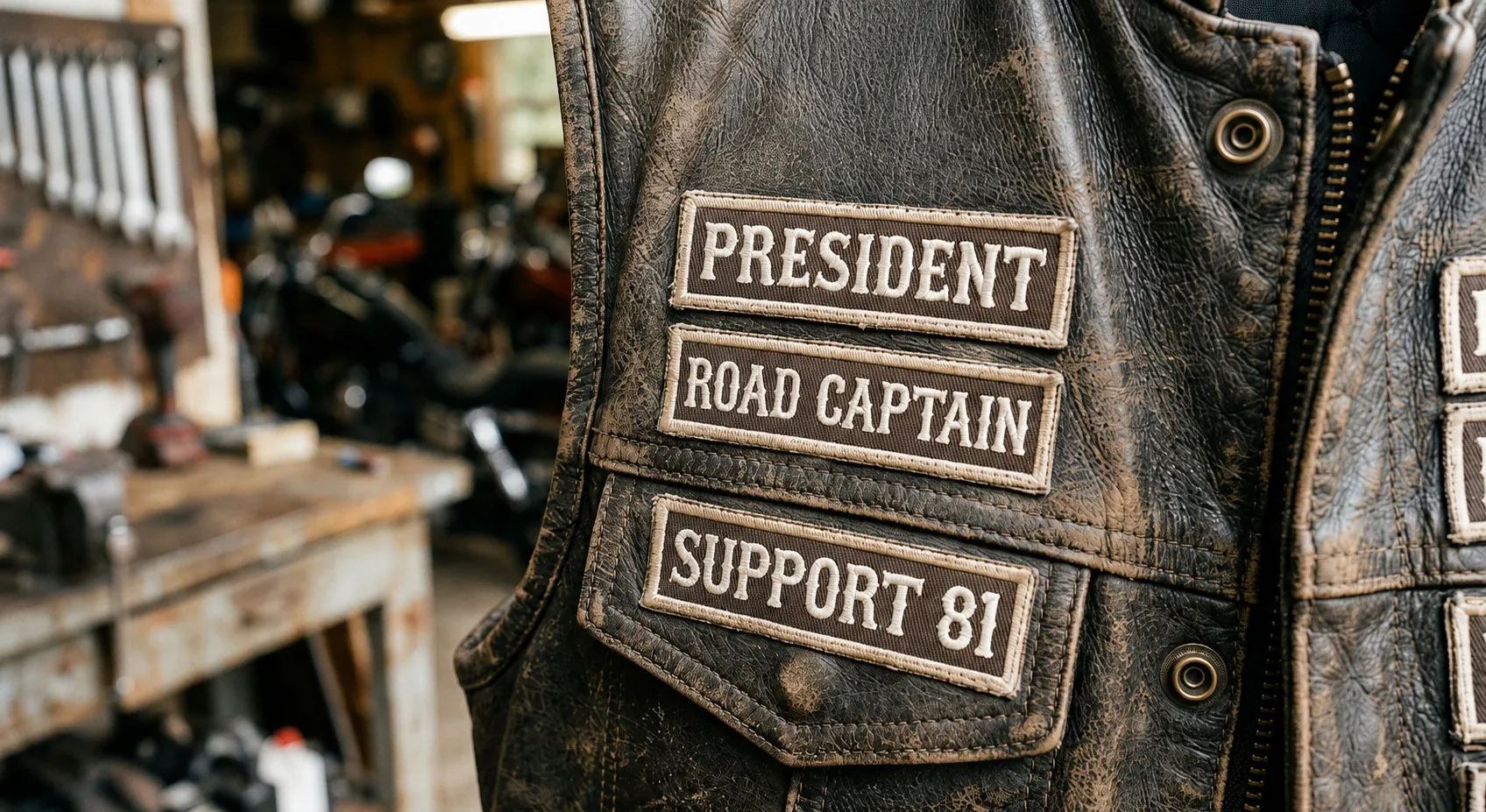
Patches aren't accessories; they're earned through a rigorous journey. It starts as a "hang-around," where someone socializes with the club and proves fit. Next comes "prospect" status (sometimes called "striker"), lasting a year or more. Prospects handle tasks, attend events, and wear partial patches (often just the bottom rocker and MC).
Full membership requires a unanimous chapter vote. Only then does a rider receive the complete three-piece set in a formal "patching" ceremony. Patches belong to the club, not the individual; members return them if they leave.
Front patches denote ranks and roles:
- President
- Vice President
- Sergeant-at-Arms (security and enforcement)
- Road Captain (ride planning)
- Secretary/Treasurer
Special patches recognize achievements or beliefs:
- AFFA ("Angels Forever, Forever Angels"): Lifelong dedication.
- Men of Mayhem (MOM): For bravery or violence in club defense.
- Filthy Few: Extremely rare, signifying extreme loyalty (interpretations vary, often tied to high-stakes actions).
- 81: Shorthand for H (8th letter) and A (1st), used in support contexts.
These form a visual language understood instantly in biker circles.
Why Are Hells Angels Patches Legally Protected?
Since 1966, the club has aggressively protected its marks through lawsuits against Disney (Wild Hogs), Marvel Comics, Alexander McQueen, Toys "R" Us, and others, often winning removals or settlements. The Death Head and rockers are global trademarks; unauthorized commercial use faces legal action.
Rules are strict: Only full-patch members wear the official set. Prospects get partials; supporters use "Support 81" or similar. Wearing fakes or unearned patches disrespects the brotherhood and can lead to confrontations, warnings, or worse, as members view it as impersonation.
The Ongoing Fascination and Controversy
Hells Angels patches polarize because of the club's outlaw reputation, media portrayals, and links to violence, rivalries (like the Quebec Biker War), and crime allegations. Bans in places like the Netherlands underscore the tension. Yet many admire them as emblems of freedom, loyalty, and anti-establishment grit.
The patches inspire collectors; vintage, authentic ones are prized (though true club patches aren't sold). Supporters buy "81" gear legally
Conclusion
Hells Angels patches embody over 75 years of history, from postwar roots to global icon status. Earned through dedication, fiercely protected, and endlessly fascinating, they remind us why patches matter in biker culture.
Ready to create your own meaningful custom patch? We're here with expert help and a free quote. Ride safe out there!