
Most patches fall in the 3 to 5 inch range. The right size for your patch depends on where you plan to use it and how much detail your design carries. A small logo on a hat works at 2 inches. A back patch on a biker jacket goes up to 12 inches. Everything else sits somewhere in between.
Patches have been an integral part of the fashion industry for generations, carrying a rich historical and cultural significance. They have been at the heart of brotherhoods like the biker clubs and have a prestigious history associated with institutions like Harvard University. They have also served as symbols of resistance and liberation, appearing in protests that shaped our country's history.
The popularity of patches led them to grace the pieces of famous fashion houses like Gucci and Versace. And when these patches were not gracing the runway, they were still in demand in the corporate, academic, and military worlds. They represent a company name, a school, a soldier's rank and unit, or simply a personal statement of style.
This guide breaks down the standard patch sizes used across each of these applications, the formula manufacturers use to measure them, and the factors that decide which size will work best for your design.
How Is Patch Size Measured? The Industry Formula
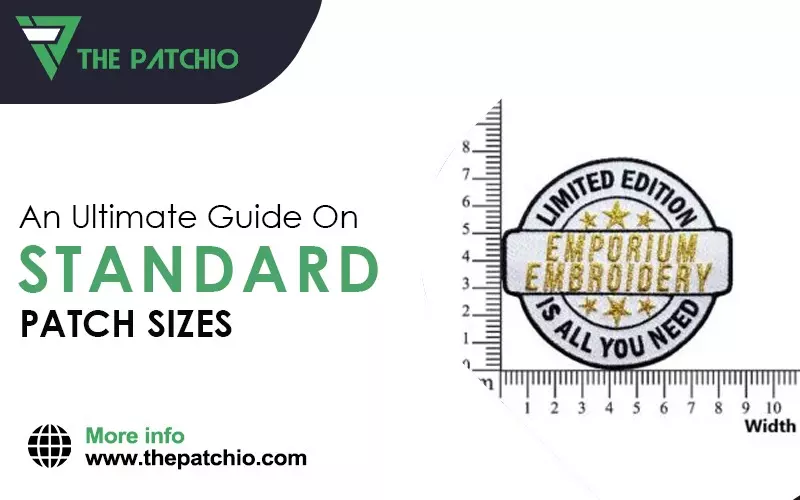
Before getting into specific sizes, it helps to know how patch size is actually calculated. The number you see when ordering a 3 inch or 4 inch patch is not the height alone or the width alone. It is the average of both.
The industry formula is: Patch Size = (Height + Width) / 2
So a patch that measures 4 inches tall and 3 inches wide has a size of 3.5 inches. A 5 by 5 inch square patch is a 5 inch patch. This formula works for every shape, including circles, hexagons, shields, and fully custom outlines. You simply draw a rectangle around the design, measure the longest height and longest width, and average the two.
This is the standard most patch manufacturers use when quoting price and production. Knowing it helps you compare quotes accurately and pick the right size for your design.
Standard Patch Sizes by Use Case
The table below shows the most common sizes used across industries. Use this as a starting point and adjust based on your specific design and placement.
| Patch Type | Standard Size |
|---|---|
| Scout Patches (Boy / Girl Scouts) | 3 inches |
| Police, Fire, and Security Patches | 4 to 5 inches |
| Biker Club Back Patches | 10 to 12 inches |
| Logo Patches (corporate / school) | 3 to 3.5 inches |
| Sports Patches | 3 to 5 inches |
| Hat Patches | 2 to 3 inches |
| Morale Patches | 2 to 4 inches |
| Military Shoulder Sleeve Insignia | 2.75 to 3.5 inches |
| Name Tape Patches | 1 by 4 inches |
| Back Patches (jackets, vests) | 7 to 12 inches |
| Chest Patches | 3 to 4 inches |
| Sleeve Patches | 3 to 4 inches |
The sections below explain each one in more detail.
Need More Information?
Request a quote. We will get back to you within 8-12 hours with a custom product quote.
A Guide on Standard Patch Sizes
Although numerous patch size options are available, people always ask questions about the ideal size. The answer depends on the surface you want to put the patch on and the kind of patch you want. A small 2 inch patch works well on a backpack or hat. A larger 6 inch patch is suited for the chest of a jacket. A 12 inch patch belongs on the back of a vest or biker jacket where it can command attention.
The quality of a patch is significantly influenced by its size and type. Each patch has an optimal size for maximum visual impact. Larger patches do offer superior detail because they give the embroiderer or molder more space to work with. A 9 inch custom embroidered patch can showcase intricate details that a 4 inch patch cannot reproduce as cleanly.
Below is a breakdown of the most common applications and the size that works best for each.
Girl and Boy Scout Patches
The standard patch size is around 3 inches. This applies to most rank patches, merit badges, and event patches. Scout uniforms have specific placement zones, so sticking close to 3 inches keeps the design consistent with official guidelines.
Official Police, Fire, and Security Duty Patches
Whether the patch is for the fire department, police department, or a private security uniform, the ideal patch size sits between 4 and 5 inches. This size keeps the unit name, badge symbol, and department details readable from a normal viewing distance, which matters in the field.

Biker Club Patches
Biker club patches carry a lot of detail, including the club name, location rocker, and central insignia. Because of this, the size needs to be more significant. The full back patch for a biker generally sits between 10 and 12 inches, sometimes larger for the central design alone.
The ideal placement is on the back of the jacket or vest where the design is fully visible. Smaller chest patches and rocker patches in the same set typically run 3 to 5 inches.

Logo Patches
These patches are used widely in the corporate and academic world. The size needs to be large enough to make out the name or logo of the brand or school but small enough to sit cleanly on a polo, jacket, or cap.
The standard patch size for logo patches usually falls between 3 and 3.5 inches, which is the sweet spot for readable text on most uniforms.

Sports Patches
Sports patches typically sit between 3 and 5 inches, depending on placement. Sponsor patches, captain badges, and team logos worn on jerseys often run 3 to 4 inches.
Larger commemorative patches for championship years or special events can go up to 5 inches. Number patches and small position indicators stay closer to 2 inches.

Hat Patches
A hat does not give you much surface to work with, so most hat patches sit between 2 and 3 inches. Trucker caps and snapbacks can take a slightly larger 3 inch front panel patch.
Fitted baseball caps usually do better with smaller 2 to 2.5 inch patches that follow the curve of the cap. Side panel and back of hat patches stay smaller, typically around 1.5 to 2 inches.
Patches for Jackets
Jackets give you the most flexibility. You can run a patch as small as 2 inches on the chest or as large as 13 inches across the back. The general breakdown is:
Chest patches sit at 3 to 4 inches. Sleeve and shoulder patches sit at 3 to 4 inches. Back patches run anywhere from 7 to 12 inches depending on how much real estate the design needs. If you are unsure about the size for your specific jacket, a 4 inch chest patch and an 11 inch back patch is a safe starting point.
Morale Patch Size
Morale patches, often used to display humorous, motivational, or symbolic messages, vary in size depending on their use. The standard size ranges from 2 to 4 inches. Tactical morale patches that go on Velcro panels typically sit at 2 by 3 inches or 3 by 4 inches, which fit standard MOLLE webbing layouts on plate carriers and backpacks without overwhelming the surface.
Military Patch Size
Military patches are essential for identifying ranks, units, and missions, and they follow standardized sizes set by each branch.
The shoulder sleeve insignia, which is the unit patch worn on the upper sleeve of US Army uniforms, typically measures around 2.75 to 3.5 inches in height per AR 670-1 regulations. This is smaller than what some general guides claim, and using the correct dimensions matters for any patch meant for active duty wear.
Name tapes are usually 1 inch tall and 4 to 5 inches wide. Rank insignia patches sit closer to 2 inches. Specialty and mission patches generally fall in the 3 to 4 inch range. The sizes are carefully regulated to keep visibility and identification consistent across uniforms.
Factors That Decide Your Patch Size
Beyond the standard sizes, three things affect what will actually work best for your design.
Purpose of the patch. A patch made for identification, like a uniform unit patch or a brand logo on promotional gear, leans toward larger sizes for visibility. A patch meant as a subtle accent on streetwear or a hat can stay small at 1 to 2 inches.
Placement on the garment. Chest and pocket patches are typically smaller at 2 to 4 inches. Shoulder and sleeve patches sit at 3 to 5 inches. Back patches are the largest, going up to 12 inches because they carry the most visual weight from a distance. Hat and cap patches stay small to fit the curvature of the headwear.
Design complexity. Designs with fine text, slogans, or detailed artwork need more space. A logo with small lettering at 2 inches will lose readability after embroidery. The same logo at 3.5 inches reads cleanly. As a general rule, the smallest readable text in an embroidered patch is around 0.25 inches in height, which usually means a minimum overall patch size of 3 inches if your design includes any text.
The Bottom Line
The right patch size comes down to where the patch will go, what your design needs to communicate, and how much detail it carries. Use the size table above as a starting point, factor in placement and design complexity, and you will land on the right number.
If you are still unsure about the size for your specific application, the team at ThePatchio will help you pick based on your artwork and intended use. Upload your design at thepatchio.com and you will receive a digital proof showing exactly how the patch will look at the recommended size before anything goes into production.